

The President of Tanzania Hon. John Magufuli has recently launched the Agricultural Development Plan Plan Second Sector Phase Two (ASDP II). The five-year plan is one of the key instruments that the government uses to meet Tanzania Development Vision (TDV) 2025 and will be implemented until 2023 for a total investment of TZS13.8 trillion.
According to the Plan, the government of Tanzania would finance about 38% of the programme while development partners would provide 57% (37% on-budget) and beneficiaries/farmers about 5%.
Speaking at the launch of the Plan President Magufuli has reminded that the main purpose is to bring reform in small-scale farming, livestock, and fishing sectors to increase productivity, to increase revenue for farmers, and increase food security.

In addition, President Magufuli has indicated that the government will strengthen the implementation of the Southern Agricultural Growth Corridor of Tanzania (SAGCOT), which in 2016 was awarded a TZS 150 billion loan from the World Bank.
Initiated in 2010, SAGCOT is a public-private partnership that aims to further develop the Tanzania agricultural sector through agribusiness investments in the country’s southern corridor.
President Magufuli also expressed his dissatisfaction with the Tanzania Agricultural Development Bank (TADB), the state-owned development finance institution established to provide credit for the development of agriculture in the country, and that failed to meet its target, thus negatively impacting of the first phase of the Plan (ASDP I).
Tanzania Agriculture
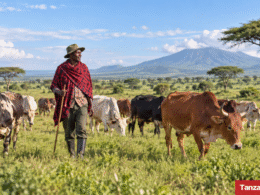
Agriculture is Tanzania’s economic mainstay, contributing USD 13.9bn to its GDP (nearly 30%) and 67% to total employment during 2014.
ASDS II goals, in line with TDV 2025, include inclusive and sustainable agricultural growth of 6% per annum, reduced rural poverty (per cent of rural population below the poverty line from 33.3% in 2011/2012 to 24% in 2025, and enhanced food security and nutrition (per cent of rural HHs below food poverty line: 11.3% in 2011/2012 to 5% in 2025.

Want to know more about Agriculture in Tanzania? Our free overview of the Tanzania Business and Investment Guide 2026 covers Agriculture, plus key sectors and investment opportunities. The complete 141-page edition includes policies, taxation, key regulations, full macroeconomic data, and sources, and is also available at no cost upon completion of a short form.
Download Free OverviewGet the Full Edition for Free