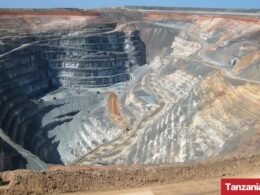
The Tanzanian Ministry of Energy and Minerals (MEM) has recently announced that Tanzania will soon become one of the largest producers of graphite in the world, due to recent and abundant discoveries of graphite fields across the country.
The discoveries come mainly from Magnis Resources Limited (ASX:MNS), Mozambi Resources (ASX:MOZ) and Kibaran Resources Limited (ASX:KNL) which manage a total of five graphite projects across Tanzania and whose recently updated inferred reserves has not been disclosed yet.
However, according to the projects’ prospects, Magnis Resources manages an exploration target between 325 metric tonnes (MT) and 490 MT at 4% to 9% graphite at its Nachu Graphite Project in Mtwara, Tanzania’s south eastern region.

Kibaran Resources which manages the Epanko Graphite, Merelani-Arusha and Tanga Graphite Projects estimates its probable reserves in 10.9 MT at 8.6% and 17.2 MT at 6.5% for the first two projects since the latter one is still in sampling stage.
Mozambi Resources manages the Nachingwea Project in Tanzania’s south eastern region and it has not released yet an official proved reserves; however, due to its closeness to the Mozambique Mobile Belt of metamorphic rocks, it is expected to be similar to the Balama-Monte-Puez project in Mozambique with 1,150 MT at 10.2% graphite.
Tanzania will soon become the biggest producer of graphite in the world if the three companies start production in the short-term, since some high-volume deals are being prepared to sign with Chinese investors, explained Tanzanian MEM Commissioner Paul Masanja.
According to Maps of World’s website, Tanzania would become the 8th largest graphite producer in the world in the short-term since it has already sign a contract to start exporting 10,000 MT of graphite per annum from the Epanko Project.
So far Zimbabwe is the only African country located in the top ten producers of graphite with an annual production of 6 MT, with China topping the list with a production of 780 MT per annum according to Maps of World.

Tanzania Graphite
Tanzania’s largest graphite deposits are located in the central and east southern regions of the country.
Graphite discoveries in Tanzania come mainly from Australia based graphite developers, Magnis Resources (ASX:MNS), Volt Resources (ASX:VRC) and Kibaran Resources (ASX:KNL).
Want to know more about Mining in Tanzania? Our free overview of the Tanzania Business and Investment Guide 2026 covers Mining, plus key sectors and investment opportunities. The complete 141-page edition includes policies, taxation, key regulations, full macroeconomic data, and sources, and is also available at no cost upon completion of a short form.
Download Free OverviewGet the Full Edition for Free