
World Bank
The World Bank holds 9.0 billion USD in IDA commitments across 34 active operations in Tanzania, making it the country's largest single development finance partner.[1]
The World Bank Group has worked in Tanzania since the country joined the institution in 1962, and its current engagement spans nearly every sector of the economy, from electricity transmission and trunk roads to secondary education, maternal health, rural water, social safety nets and urban flood defence.[1][3]
For investors, the Bank matters for three reasons that have little to do with aid.
It finances the infrastructure that determines the cost of doing business in Tanzania, it underwrites the policy reforms that shape the regulatory environment, and through the International Finance Corporation it invests directly alongside private capital.[1]
This page sets out what the World Bank funds in Tanzania today, how the portfolio is structured, what it has delivered, and what is coming next.
Contents
The World Bank Group in Tanzania
The World Bank Group is not a single institution but four that operate in Tanzania under one country management structure.
The International Development Association, IDA, is the concessional lending arm and accounts for the overwhelming majority of the Bank's Tanzania exposure, providing credits and grants to government on terms far softer than commercial markets.[1]
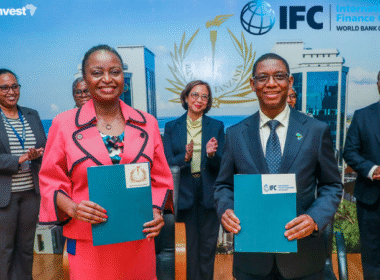
The International Finance Corporation, IFC, invests in and lends to private companies, committing 360 million USD in Tanzania in FY25 against an outstanding portfolio of 307 million USD, with a pipeline of 864 million USD identified for FY26 and FY27.[1]
The Multilateral Investment Guarantee Agency provides political risk insurance to foreign investors, and the International Centre for Settlement of Investment Disputes handles investor state arbitration.
Country operations for Tanzania are directed from Dar es Salaam by Nathan Belete, Country Director for Malawi, Tanzania, Zambia and Zimbabwe, who oversees roughly 12.5 billion USD in commitments across the four countries.[6]
Country Partnership Framework 2025 to 2029
Every World Bank country programme is governed by a Country Partnership Framework, the document that sets lending priorities for a multi-year period and against which new projects must be justified.
Tanzania's current framework runs from FY2025 to FY2029 and is built on three pillars: enhancing human capital to boost labour productivity, catalysing private sector led growth, and enhanced resilience to shocks and climate impacts.[1]
Two cross-cutting priorities run through all three pillars, the empowerment of women and youth, and improved government effectiveness.[1]
The second pillar is the one that most directly concerns foreign investors, because it commits the Bank to financing the conditions for private investment rather than substituting for it, through transport corridors, power transmission, digital infrastructure, financial sector deepening and regulatory reform.[1]
The framework is deliberately aligned with Tanzania's own Third Five Year Development Plan and with the long-term Vision 2050, which means Bank lending tends to follow rather than lead national priorities.
Active Portfolio by Sector
The 34 active operations are concentrated in a handful of sectors, and the largest individual commitments give a clear picture of where the money goes.[1][3]
In education, the portfolio totals around 1.5 billion USD, anchored by the Secondary Education Quality Improvement Project, a further 500 million USD tranche of which was approved in June 2025, alongside Boost Primary Student Learning at 890 million USD and the Higher Education for Economic Transformation Project at 425 million USD.[1][3]
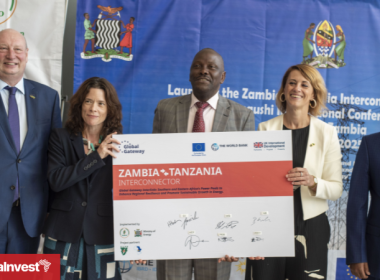
In energy, the Tanzania Zambia Transmission Interconnector is the flagship, with an original 745 million USD operation approved in 2018 and a further 605 million USD regional tranche approved in December 2024, complemented by the 420 million USD Accelerating Sustainable and Clean Energy Access Transformation project approved in November 2023.[3]
In transport, the Tanzania Transport Integration Project carries 647 million USD, the Dar es Salaam Urban Transport Improvement Project 451 million USD, the Dar es Salaam Maritime Gateway Project 421 million USD, and the Roads to Inclusion and Socioeconomic Opportunities programme 400 million USD with a further 350 million USD approved in February 2025.[3]
In water, the Sustainable Rural Water Supply and Sanitation Program carries 650 million USD in IDA financing, with Phase II approved in September 2025 and the Second Tanzania Water Sector Support Project approved in October 2025 at 230 million USD.[1][3]
In health and social protection, the Maternal and Child Health Investment Program runs at 284 million USD with a 275 million USD successor approved in June 2025, and the Productive Social Safety Net III Project was approved in March 2026 at 272 million USD.[3]
Urban Resilience and Disaster Risk Management
The fastest growing part of the Tanzania portfolio over the past decade has been urban resilience, and it is also the best documented.
Over ten years the World Bank and the Global Facility for Disaster Reduction and Recovery have mobilised 1.7 billion USD in resilience investments in Tanzania, catalysed by just 2.7 million USD in GFDRR technical assistance grants.[2]
The scale of the problem justifies the spending.
Tanzania has experienced more than 65 major disaster events in the past two decades, with floods and droughts alone causing annual economic losses of 170 million USD.[2]
Flooding has increased tenfold since the 1970s, and in Dar es Salaam seasonal flooding affects an estimated 70,000 people each year with average annual losses of 80 million USD.[2]
The exposure is rising because the country is urbanising fast, with nearly half the population expected to live in urban areas by 2040 and four cities projected to generate 60% of GDP by 2030.[2]
Dar es Salaam Metropolitan Development Project
The first phase of the Dar es Salaam Metropolitan Development Project was approved in 2015 at 330 million USD and closed in 2023, having delivered improved urban services and infrastructure to 4.1 million people.[2]
A second phase of the same size, 330 million USD, was approved in December 2023 and aims to strengthen climate resilient urban infrastructure and services for 3.3 million people in the Dar es Salaam region by 2030.[2]
Msimbazi Basin Development Project
Approved in September 2022 at 260 million USD, the Msimbazi Basin Development Project is the Bank's most technically ambitious urban operation in Tanzania.[2]
It aims to strengthen flood resilience across 420 hectares of the Msimbazi Basin while creating 2,000 jobs, using nature based solutions such as terracing, mangrove buffers and a flood resilient city park in place of conventional concrete channelisation.[2]
The project is co-financed by IDA, the Spanish Agency for International Development Cooperation and the Netherlands Ministry of Foreign Affairs.[2]
More than 2,200 households have been relocated from high risk areas with livelihood restoration support, and the design was shaped by the Msimbazi Charrette, a nine month participatory planning process involving over 150 representatives from 59 institutions.[2]
For investors the relevant finding is commercial: World Bank supported real estate assessments concluded that flood protection in the basin could unlock up to 900 million USD in investment, and technical assistance began in FY24 to organise investor solicitation for redevelopment areas made viable by the flood works.[2]
TACTIC and secondary cities
The Tanzania Cities Transforming Infrastructure and Competitiveness project, TACTIC, was approved in June 2022 at 278 million USD and operates across 45 towns and cities, with 5.5 million expected beneficiaries by 2028.[2]
It has financed sanitary landfills and solid waste collection systems, hundreds of kilometres of roads with streetlights, footbridges and bus terminals, and more than 150 kilometres of drainage infrastructure, alongside work on land use planning, city management and local revenue collection.[2]
Cities supported include Tanga, Mtwara, Sumbawanga and Mwanza, and 121 infrastructure sub-projects have been mapped against hazard exposure.[2]
Dodoma Integrated and Sustainable Transport
Approved in March 2025 and financed by a 200 million USD IDA credit, the Dodoma Integrated and Sustainable Transport project responds to a capital city whose population grew from 410,956 in 2012 to 765,179 in 2022, an annual growth rate of 6.4%, with its built-up area expanding more than 440% since 2000.[2]
The project targets more than 430,000 beneficiaries and more than 10,000 jobs, upgrading corridors linking the Standard Gauge Railway station, the airport, markets and hospitals, and is expected to raise the city's economic output by 2%.[2]
More than 750 public transport drivers and operators will benefit directly, and the operation is coordinated with JICA, the African Development Bank and the Tanzania Transport Integration Project.[2]
Catastrophe Deferred Drawdown Option
In June 2025 the World Bank approved a 300 million USD Development Policy Financing operation, comprising 100 million USD in budget support and a 200 million USD Catastrophe Deferred Drawdown Option, or Cat-DDO.[2]
A Cat-DDO is a contingent credit line that disburses immediately when a disaster is declared, giving the Treasury liquidity without waiting for a new loan to be negotiated, and is expected to benefit 1.9 million people by 2028.[2]
Access required Tanzania to meet policy readiness criteria, which drove the revision of the National Water Policy, the Zanzibar Water and Sanitation Policy and the Zanzibar Energy Policy, and the operationalisation of the 2022 Disaster Management Act.[2]
Institutional and Data Systems
A significant share of World Bank engagement in Tanzania is technical rather than financial, and it has produced institutions that now operate independently.
The national Emergency Operations and Communication Center in Dodoma, managed by the Prime Minister's Office, coordinates real time monitoring of floods, droughts and epidemics, and its Situation Room was inaugurated in June 2024.[2]
Emergency communications coverage in Dar es Salaam was raised from 50% to 100% with World Bank and Tanzania Urban Resilience Program support.[2]
The Resilience Academy, which grew out of the Ramani Huria participatory mapping initiative, has trained more than 1,400 young Tanzanians in flood mapping and climate risk data, in partnership with Tanzanian universities.[2]
OpenMap Development Tanzania, a company founded by former Resilience Academy students, won the 2025 Zayed Sustainability Prize in the Climate Action category.[2]
Zanzibar
Zanzibar has its own set of World Bank operations reflecting its separate government and legal system.
Active projects include the Zanzibar Energy Sector Transformation and Access Project at 142 million USD approved in June 2021, Boosting Inclusive Growth for Zanzibar at 150 million USD, the Zanzibar Improving Quality of Basic Education Project at 50 million USD, and the Zanzibar Judicial Modernization Project approved in May 2024 at 30 million USD.[3]
The judicial modernisation operation is of direct interest to investors, since contract enforcement and commercial dispute resolution speed are persistent constraints on doing business in the isles.
Economic Analysis and Country Diagnostics
Beyond lending, the World Bank is the most consistently cited source of independent economic analysis on Tanzania, and its diagnostics move policy.
The Tanzania Economic Update is published roughly twice a year and pairs a macroeconomic review with a special thematic focus, the February 2026 edition examining foundational human capital through basic education.[4]
The Bank reports that Tanzanian GDP expanded by about 5.8% in the first half of 2025, driven by mining, construction, financial services and export performance, and projects growth of 6.1% in 2026 supported by infrastructure investment.[4][5]
Macroeconomic stability has been underpinned by low inflation and improved foreign exchange conditions, though the Bank flags revenue constraints, rising expenditure and increasing debt vulnerabilities as pressures on the fiscal position.[4]
Tax revenues stand at 13.8% of GDP and the current account deficit at 3.3% of GDP as of 2025, while GDP per capita is approximately 1,400 USD and the poverty rate is estimated at 48% measured at 3 USD per person per day in 2021 purchasing power parity terms.[1]
That poverty figure is the single most important number in the World Bank's Tanzania portfolio, because it explains why lending remains concentrated in human capital and basic services rather than in the commercial infrastructure investors most want to see accelerated.
What the World Bank Will Finance Next
The direction of the pipeline is legible from recent approvals and from the Country Partnership Framework.
Human capital remains the largest commitment, with the Second Education and Skills for Productive Jobs Program approved in March 2026 at 300 million USD and the Productive Social Safety Net III Project approved the same month at 272 million USD.[3]
Climate and resilience financing is scaling rather than plateauing, with the Scaling-up Locally Led Climate Action Program approved in June 2025 at 110 million USD and the Tanzania Scaling-up Sustainable Marine Fisheries and Aquaculture project at 117 million USD.[3]
Regional power integration continues through the Tanzania Zambia Transmission Interconnector, which positions Tanzania as a transit country in the Eastern and Southern Africa power trade.[3]
On the private sector side, the IFC pipeline of 864 million USD identified for FY26 and FY27 represents the clearest signal of where commercial co-investment opportunities are expected to emerge.[1]
GFDRR has committed to deepening its Tanzania engagement under its 2026 to 2030 strategy, with an expanded focus on slow-onset hazards such as drought and sea level rise alongside the existing work on floods.[2]
Last updated: 5th September 2026
References
- World Bank, Tanzania Country Overview
- World Bank and GFDRR, A Decade of Partnership: Working Together for a More Resilient Tanzania, 2025
- World Bank Projects and Operations, Tanzania
- World Bank, Tanzania Economic Update
- World Bank, Macro Poverty Outlook: Tanzania
- World Bank, Nathan Belete, Country Director for Malawi, Tanzania, Zambia and Zimbabwe