Mortgages
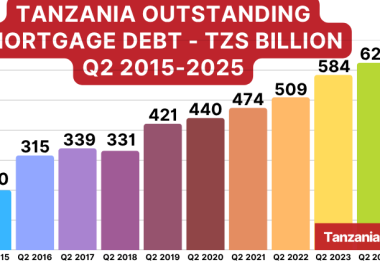
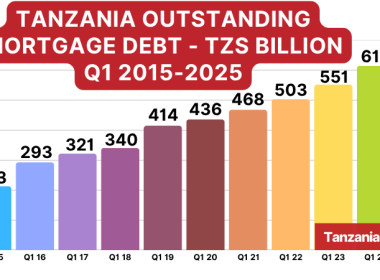
Formal mortgage finance in Tanzania stands at just 0.29% of GDP, with 29 different banking institutions offering residential mortgages as of June 2025[3].
Tanzania's mortgage market is small but expanding, constrained by high interest rates, cumbersome title issuance processes, and the emergence of consumer loans as a competing housing finance product.
Demand fundamentals are exceptionally strong: the current housing deficit stands at 3,000,000 units, with annual demand rising by 200,000 units[1], and the country will require 26,840,909 housing units by 2050 to meet projected population growth[2].
Contents
Mortgage Market Size and Penetration
Formal mortgage finance in Tanzania stands at 0.29% of GDP, reflecting the near absence of long-term housing finance relative to the size of the economy[3].
As a direct consequence, about 99% of houses in Tanzania are built out-of-pocket, typically over 5 to 10 years instead of the 9 to 12 months that mortgage-financed construction would allow.
Demand for housing loans is high but suppressed by high interest rates and limited eligibility linked to title documentation issues.
Most lenders offer loans for home purchase and equity release, while a few provide loans for self-construction, which remain expensive for the average Tanzanian borrower.
Interest Rates and Affordability
Interest rates on residential mortgages have improved substantially over the past decade and a half, falling from 22-24% in 2010 to 13-19% today[3].
Despite this improvement, rates remain relatively high and continue to reduce affordability for middle-income households.
Cumbersome processes around the issuance of titles, especially unit titles for apartments and condominium developments, further affect borrowers' eligibility to access residential mortgages.
Lender Landscape
As of June 2025, 29 different banking institutions were offering residential mortgages in Tanzania[3].
The broader banking sector comprises 44 licensed institutions, including 34 commercial banks, three community banks, three microfinance banks, two development banks, one house financing company, and one mortgage refinancing company[5].
Commercial banks account for 97.3% of total banking sector assets, providing the deposit base from which mortgage lending is drawn.
Of the 34 commercial banks, 12 are locally owned and hold 65.7% of total commercial bank assets, while 22 are foreign-owned and account for the remaining 34.3%.
Competition from Consumer Loans
Competition for mortgage products has emerged from consumer loans, which are easier to access and carry fewer additional costs than mortgages.
Consumer loans of up to TZS 150 million (approximately USD 58,000) for up to seven years are increasingly used for housing purposes, as they rival mortgages in both loan size and tenor.
These loans compete effectively with mortgages because of their availability and the absence of registration, valuation, and insurance costs that mortgage borrowers must bear.
Policy Framework
Tanzania Mortgage Refinance Company (TMRC)
In 2020, the Tanzania Mortgage Refinance Company was established under the World Bank's Housing Finance Project to expand home ownership in Tanzania by providing long-term financing to primary mortgage lenders, stimulate the underdeveloped mortgage sector, and increase access to affordable housing.
As of 31st December 2025, the refinancing company has 21 shareholders, including the Government of Tanzania and several Tanzanian banks.
Land and Registration Legislation
Supporting laws for mortgage collateral and land tenure include the Land Act 1999 (Cap 113), the Village Land Act 1999 (Cap 114), the Land Use Planning Act 2007, and the Land Registration Act 2009, which together provide the legal structure for land allocation, registration, and compulsory acquisition with compensation.
Tax Relief on Low-Cost Housing
In 2023, to attract investors, the Government removed taxes on low-cost housing projects valued below TZS 50 million (USD 19,000).
It is currently considering extending this tax relief to homes worth up to TZS 100 million[4].
Real Estate Act and Regulatory Authority
Tanzania is in the process of finalizing a comprehensive Real Estate Act aimed at regulating, coordinating, and promoting the fast-growing real estate industry.
This initiative includes the proposed establishment of a Real Estate Regulatory Authority to oversee the sector, establish professional standards, and maintain a national database of registered agents and developers.
The legislation will also support the use of digital platforms to enhance transparency and provide accurate information on property deals.
Investment Opportunities
The gap between formal mortgage penetration at 0.29% of GDP and a housing deficit of 3,000,000 units, growing by 200,000 units annually[1], defines one of the largest untapped housing finance opportunities in East Africa.
Long-term refinancing of primary mortgage lenders is an established institutional channel through which capital providers can enter the market alongside the Government and 21 shareholder banks.
Self-construction lending remains underserved and expensive for the average Tanzanian, presenting scope for specialised products aligned with the 5 to 10 year informal build cycle that currently absorbs 99% of housing activity.
Affordable housing developers stand to benefit from the tax exemption on projects below TZS 50 million (USD 19,000), with a proposed extension to homes worth up to TZS 100 million further widening the eligible product envelope[4].
Digitised title issuance, valuation, and property information platforms, anticipated under the forthcoming Real Estate Act, create openings for proptech and mortgage-tech investors targeting the current friction in unit title registration.
Consumer loan products of up to TZS 150 million (approximately USD 58,000) for up to seven years demonstrate proven demand for housing-purpose credit at that ticket size, signalling headroom for hybrid or streamlined mortgage products that eliminate registration, valuation, and insurance cost drag.
Last Update: May 2026
References
- https://www.nhc.co.tz/img/NHC%20FS%20June%202024%20Audited.pdf (Guide reference #76)
- https://www.tanzaniainvest.com/construction/realestate/housing-demand-2050 (Guide reference #77)
- https://www.tmrc.co.tz/resources/view/tanzania-mortgage-market-update-30-june-2025 (Guide reference #78)
- https://www.thecitizen.co.tz/tanzania/news/national/government-mulls-extending-vat-exemption-to-houses-worth-sh100-million-5044400 (Guide reference #84)
- https://www.bot.go.tz/Publications/Other/Banking%20Supervision%20Annual%20Reports/en/2025090116315713.pdf (Guide reference #107)
Want to know more about Mortgages in Tanzania? Our free overview of the Tanzania Business and Investment Guide 2026 covers Mortgages, plus key sectors and investment opportunities. The complete 141-page edition includes policies, taxation, key regulations, full macroeconomic data, and sources, and is also available at no cost upon completion of a short form.
Download Free OverviewGet the Full Edition for Free