
Mobile
Tanzania's mobile SIM subscriptions reached 106.8 million at the end of 2025, translating into a telecom penetration rate of 156.9%, with 4G coverage extending to 94.2% of the population and 5G reaching 30.1%.[1]
Mobile is the backbone of Tanzania's digital economy, with SIM subscriptions accounting for 99.9% of all telecom subscriptions at the end of 2025.[1]
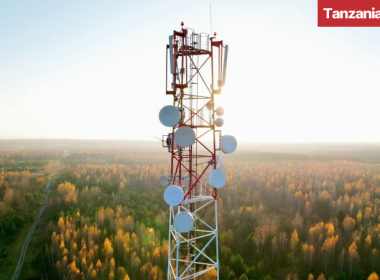
The market is served by five licensed mobile operators competing across voice, data, and value-added services, supported by a network of 10,029 telecom towers and rapidly expanding 4G and 5G footprints.[1]
Contents
Mobile Market Size and Penetration
Total telecommunications subscriptions in Tanzania reached 106.9 million at year-end 2025, up 23.2% from 86.8 million at the end of 2024.[1]
Mobile SIM subscriptions for person-to-person services stood at 106,823,601, with fixed lines representing only a marginal share of total connections.[1]
The resulting telecom penetration rate of 156.9% reflects widespread multi-SIM usage and vastly exceeds the original policy target of six telephones per 100 people set under the earlier national telecommunications framework.[1]
Smartphone penetration reached 41.82% while feature phone penetration reached 87.11%, indicating significant remaining headroom for smartphone-driven data adoption.[1]
The Information and Communication Technologies sector was estimated at TZS 3.2 trillion in 2024, contributing 1.6% to GDP in the first nine months of 2025 and growing at 10.4% year-on-year.[1]
Network Operators and Market Structure
Five mobile operators provide services across the country, competing on voice, data, and enterprise offerings under a Converged Licensing Framework introduced in 2005 that allows technology- and service-neutral licensing.[1]
Vodacom Tanzania Plc is the country's largest telecom operator and has been listed on the Dar es Salaam Stock Exchange since 2017, following the 2016 Finance Bill requirement for telecommunications companies to list locally.[1]
Vodacom, Airtel, Tigo, and Halotel are among the leading players active in the mobile market, alongside TTCL which also manages the National ICT Broadband Backbone on behalf of the Government.[1]
The competitive structure has driven continuous investment in network capacity, tariff innovation, and rural coverage, with operators leveraging shared tower infrastructure to expand into underserved areas.[1]
4G, 5G and Tower Infrastructure
Tanzania's mobile network coverage has expanded significantly, with 2G reaching 98.6% of the population, 3G reaching 93.9%, and 4G reaching 94.2% at the end of 2025.[1]
5G population coverage reached 30.1% in 2025, marking a rapid rollout since commercial launches began, and positioning Tanzania among the East African leaders in next-generation mobile deployment.[1]
The number of telecom towers rose to 10,029 at the end of 2025, supporting both coverage expansion and capacity densification in urban centers.[1]
Mobile broadband remained the dominant internet access mode, accounting for 56% of total internet subscriptions, with average speeds of 27.9 Mbps for downloads and 21.0 Mbps for uploads.[1]
Internet subscriptions reached 58.1 million at year-end 2025, and data traffic increased to 808 petabytes in Q4 2025 from 617 petabytes in Q4 2024, illustrating the strain and opportunity for further network investment.[1]
Regulatory Framework and TCRA
The mobile sector is regulated by the Tanzania Communications Regulatory Authority (TCRA), established in 2003 as an independent regulator responsible for licensing and oversight of the postal, broadcasting, and communications industries.[1]
The 2005 Converged Licensing Framework enables operators to provide multiple communication services under a single license, increasing sector attractiveness to foreign and domestic capital.[1]
Successive policy revisions, including the 2003 National ICT Policy and its 2016 update, have guided the transition of mobile networks from GSM to LTE, the migration to optical fiber transmission, and the extension of coverage to rural communities.[1]
Under Tanzania Development Vision 2050, the Government has prioritized expansion of 4G and 5G coverage as part of Accelerator 3 on Digital Economy and Innovation, integrating ICT across governance and business.[1]
For context on mobile financial services enabled by these networks, see mobile money.
Investment Opportunities in Mobile
Investment is open in licensed telecommunications activities, including private network links via cable, radio, or satellite, and public mobile communication systems such as cellular telephony, paging, and trunked radio.[1]
Further prospects lie in value-added network and data services, alongside the sale, installation, repair, and maintenance of terminal equipment, and community telecommunications services in rural and urban areas.[1]
Priority pipelines under Vision 2050 include fiber-to-the-home and fixed wireless 4G networks, deployment of low-cost mobile communication solutions in rural areas, and a nationwide public WiFi program.[1]
The Government is also targeting local manufacturing of ICT and smart devices, including mobile phones, to bridge the digital divide and reduce import dependency.[1]
Emerging technology hubs supporting artificial intelligence, blockchain, the Internet of Things, robotics, and 5G form a further layer of the investment pipeline aligned with mobile network expansion.[1]
FDI into information and communication activities more than doubled to USD 198 million in 2023, driven by growing demand for internet services and mobile-enabled transactions.[1]
Last Update: July 2026
References
Want to know more about Mobile in Tanzania? Our free overview of the Tanzania Business and Investment Guide 2026 covers Mobile, plus key sectors and investment opportunities. The complete 141-page edition includes policies, taxation, key regulations, full macroeconomic data, and sources, and is also available at no cost upon completion of a short form.
Download Free OverviewGet the Full Edition for Free