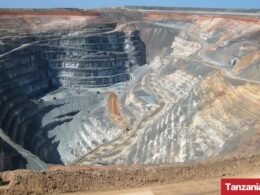


Tanzania has approved the allocation of 10% of revenue generated from the mining sector to finance advanced mineral exploration activities, a move aimed at identifying new mineral deposits and attracting further investment into the industry.
The announcement was made by Minister of Minerals Anthony Mavunde while presenting the Ministry’s budget estimates for the 2026/2027 financial year in Parliament in Dodoma on June 22, 2026.
According to Mavunde, the funding will be used to strengthen advanced mineral exploration programmes and improve the country’s understanding of its mineral resource potential.

The Minister said Tanzania has already made substantial progress in geological research, with geological mapping completed across 97% of the country, geochemical surveys covering 24%, and low-resolution airborne surveys reaching 100% coverage since these programmes began in 1978 and 1979.
However, he noted that developments in exploration technology and the evolving needs of the mining industry require more advanced studies through high-resolution surveys capable of accurately identifying mineral-bearing geological structures and prospective mineral zones.
Mavunde said that despite Tanzania’s land area of approximately 945,000 square kilometres, only 16% of the country has so far been covered by high-resolution surveys, leaving 84% yet to undergo exploration at that level of detail.
Speaking in Parliament, the Minister said the decision represents a historic milestone for the sector.
“Today I stand here to say that in the history of our country, since the establishment of the Geological Survey and Mineral Research Institution 101 years ago, a new chapter is being written within just a few years of President Samia Suluhu Hassan’s leadership,” Mavunde said.

He added that the allocation was approved under the national budget framework presented by the Minister of Finance and will provide a major boost to the country’s mineral exploration efforts.
According to Mavunde, the initiative is expected to accelerate the discovery of new mineral-rich areas, support increased investment in the mining industry and enhance the sector’s contribution to Tanzania’s economic growth.
Mineral Exploration in Tanzania
Tanzania is one of Africa’s leading mineral-producing countries, with significant deposits of gold, diamonds, tanzanite, coal, nickel, graphite, rare earth elements and other industrial minerals.
The government has identified geological exploration as a key priority for expanding the mining sector and increasing the value generated from the country’s mineral resources.
High-resolution geological surveys are widely used by governments and mining companies to generate detailed geological data that can reduce exploration risk, improve resource identification and support investment decisions in new mining projects.
Want to know more about Mining in Tanzania? Our free overview of the Tanzania Business and Investment Guide 2026 covers Mining, plus key sectors and investment opportunities. The complete 141-page edition includes policies, taxation, key regulations, full macroeconomic data, and sources, and is also available at no cost upon completion of a short form.
Download Free OverviewGet the Full Edition for Free