

Fertilizers
Tanzania's domestic fertilizer production reached 158,628 tonnes in the 2024/2025 season through 36 factories currently in operation, while overall fertilizer availability climbed to 1,213,729 tonnes.
The fertilizer industry has emerged as one of Tanzania's fastest-growing agro-industrial segments, propelled by rising on-farm demand, a robust national subsidy program, and major greenfield and expansion investments.
Domestic capacity now spans hybrid organic-mineral blends, phosphate-based products, liquid fertilizers, compost, and agricultural lime, complemented by bio-pesticide manufacturing targeting mosquito larvae and crop pests.
Domestic Production and Capacity
Tanzania has experienced a massive increase in domestic fertilizer production, reaching 158,628 tonnes in the 2024/2025 season[1].
This output is generated through 36 factories currently in operation across the country.
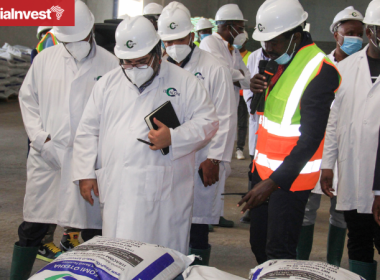
The surge is primarily attributed to two major investments: the new Itracom fertilizer factory and the expansion of the Minjingu factory.
Production includes hybrid organic and mineral fertilizers, phosphate-based fertilizers, liquid fertilizers, compost, and calcium carbonate (lime).
Manufacturing capacity has been extended into adjacent bio-input segments, including bio-pesticides targeting mosquito larvae and crop pests.
Demand, Application and Market Size
The Government heavily drives demand through a robust national subsidy program.
As a result, demand and actual application of fertilizer by Tanzanian farmers have grown significantly to 1,000,000 tonnes per year[1].
The average application rate has improved to 24 kg per hectare[1].
Overall fertilizer availability in the country reached 1,213,729 tonnes in 2024/2025.
A heavy reliance on imported chemical fertilizers persists despite the rapid expansion of local manufacturing.
The gap between national availability and domestic output highlights both the scale of substitution opportunity and the urgency of new local capacity.
Product Mix and Mineral Inputs
The product portfolio manufactured locally is broad, covering hybrid organic and mineral fertilizers, phosphate-based fertilizers, liquid fertilizers, compost, and calcium carbonate (lime).
Phosphate, a primary fertilizer input, is extensively mined in Minjingu (Manyara Region) and Nachingwea (Lindi Region), and is used in agriculture and as an ingredient in local soap production[2].
Limestone, abundantly found in Tanga, Wazo Hill (Dar es Salaam), Lindi, and Mbeya, is used as a fertilizer for highly acidic soils in the agricultural sector[2].
This vertically integrated mineral base, from raw phosphate and limestone to finished plant nutrients, anchors Tanzania's competitive position in regional fertilizer markets.
Strategic Priority in the Agriculture Master Plan
Fertilizer is recognized as a priority commodity within the Agriculture Master Plan 2050.
The plan explicitly targets the acceleration of commercial activities of priority commodities, including wheat, soybeans, poultry, aquaculture, and fertilizer.
To accelerate implementation, the Ministry of Agriculture (MOA) introduced the Agriculture Growth Corridor of Tanzania (AGCOT) initiative in 2025, building on the Southern Agricultural Growth Corridor of Tanzania platform.
Complementary master-plan targets relevant to fertilizer uptake include the digital registration of 9.9 million farmers, doubling extension service coverage, and a tenfold increase in commodity processing.
Policy Framework
The national subsidy program remains the primary policy instrument driving fertilizer demand, ensuring affordability for smallholders and underpinning the rise in application rates to 24 kg per hectare.
Fertilizer and chemical products are listed among the priority sectors of the Special Economic Zones (SEZs) and Export Processing Zones (EPZs) regime, granting fiscal and non-fiscal incentives to qualifying investors.
The petroleum sector framework also identifies the establishment of processing plants and industries for the production of fertilizers (alongside refined mineral oil, petroleum jelly, grease, and bituminous materials) as a sanctioned downstream investment area.
To bridge the gap between local demand and the heavy reliance on imported chemical fertilizers, and to further boost local production, several future initiatives are underway.
Investment Opportunities
Greenfield and brownfield manufacturing of chemical, mineral, and blended fertilizers offers the clearest opportunity, given that domestic production of 158,628 tonnes still covers only a fraction of the 1,000,000 tonnes consumed annually.
Phosphate beneficiation in Minjingu and Nachingwea, and limestone processing for agricultural lime in Tanga, Lindi, and Mbeya, provide vertically integrated entry points using local mineral resources.
Liquid fertilizers, compost, hybrid organic-mineral blends, and bio-pesticides represent higher-value product niches with growing farmer demand.
SEZs and EPZs accommodate fertilizer and chemical product investments under a dedicated incentives regime, with options spanning zone infrastructure development, manufacturing operations, and in-zone service provision.
Downstream petrochemical-linked fertilizer manufacturing is an additional channel, sanctioned within the national petroleum sector investment menu.
Investors can also tap demand-side scale through linkages with subsidy-backed distribution networks reaching smallholders across priority crops including maize, paddy, wheat, sunflower, cashew, coffee, cotton, and soybeans.
Last Update: May 2026
References
- https://www.viwanda.go.tz/uploads/documents/en-1747115028-hotuba_online_compressed.pdf (Guide reference #129)
- https://www.madini.go.tz/media/Tanzania_Mining__Investment_Conference_2024.pdf (Guide reference #155)
Want to know more about Fertilizers in Tanzania? Our free overview of the Tanzania Business and Investment Guide 2026 covers Fertilizers, plus key sectors and investment opportunities. The complete 141-page edition includes policies, taxation, key regulations, full macroeconomic data, and sources, and is also available at no cost upon completion of a short form.
Download Free OverviewGet the Full Edition for Free