

The World Bank (WB) published the ninth edition of its Tanzania Economic Update in April 2017, showing a strong and resilient economy, which however may be affected by wrong policies.
Under the State of the Economy section, the WB indicate its key findings and messages:
1) Tanzania’s economic growth rate remains higher than that of most neighboring countries.

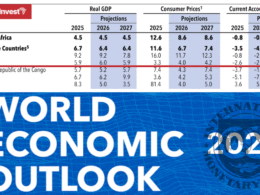
Growth in Sub-Saharan Africa slowed down significantly, dropping from an average real GDP growth rate of 4.5% in the 2010-15 period to an estimated 1.5% in 2016, the lowest rate in more than two decades.
The decline in the region’s average growth rate is the result of a number of factors, most notably the ongoing adjustments to sluggish commodity prices and the slowdown in export demand.
However, Tanzania is one of the few resource-intensive African economies that have remained resilient in the face of volatile global conditions.
In 2016, Tanzania recorded a real GDP growth rate of nearly 7%, among the highest in the region, despite a slight decline in the third quarter of 2016.
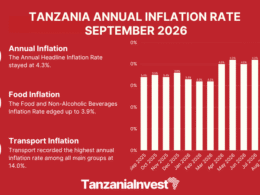
2) The inflation rate remains relatively low and near the authorities’ medium-term target of 5%, although it has trended upward in recent months, following a tightening of the food supply and rising energy costs.

However, the decline in average global oil prices has been favourable for Tanzania’s fuel import bill, which declined by about 3% in the period from 2015 to 2016.
In contrast to the price of oil, the price of gold, which is one of Tanzania’s most significant exports, has declined by much less, cushioning the country from significant terms of trade shock.
3) The current account deficit has significantly improved, with gross reserves sufficient to cover four months of imports.
4) The fiscal deficit has been contained, standing at 3.5% of GDP at end-June 2016.
5) The Tanzanian shilling has remained stable in 2016, following significant depreciation and volatility in 2015.
However, the Bank also indicates that the Government’s tight fiscal and monetary stance may have weighed on economic performance.
The 2015-16 budget saw overall spending fall below target mainly because of under-execution of development projects.
External borrowing also fell short of expectations due to delays in securing funds from foreign lenders.
A decline in foreign financing of the budget has in turn slowed both money supply growth and credit growth to both the public and private sector.
In response, the Bank of Tanzania (BOT) has recently lowered the discount rate in order to boost domestic credit growth, especially to the private sector.
Tanzania Economic Outlook
According to WB the short to medium term macroeconomic outlook remains stable and favorable, but it will largely dependent on domestic policies and performances, as Tanzania has shown its resilience to the sluggish global economic conditions.
The new administration has embarked upon a strong policy direction of improving public administration and clamping down on corruption.
While these public administration reforms are instrumental in strengthening accountability, they could also impact the private sector via two channels.
First, the private sector relies significantly on Government demand for goods and services, and policies that limit this demand will decrease private sector activity.
Second, policy adjustments, if they occur frequently, could cause uncertainty for the private sector, and this uncertainty could dampen private sector investment decisions, with negative implications for future growth.
This is why the Bank notes that to maintain and increase the growth momentum, the Government will need to focus on three key growth enablers:
1) Continued macroeconomic stability; the effective implementation of public investments; and supportive policies to promote private sector investment and growth.
2) Effective implementation of public investments; supportive policies to promote private sector investment and growth.
3) Supportive policies to promote private sector investment and growth.
The WB stresses that private sector should be encouraged to play a more significant role in investment and job creation, including through industrialization.
This could be facilitated through measures to improve access to affordable credit and reliable infrastructures such as power and transport.
Government efforts to streamline the regulatory environment are also critically important.
In her foreword, Bella Bird, Country Director for Tanzania, Malawi, Burundi and Somalia, sums it up “The impressive growth path of Tanzania to date has been driven by the decisions of the past. Future growth will be driven by the decisions of today’s leaders […] The Government must sustain efforts to mobilize domestic revenue and control recurrent expenditures, and make additional efforts to secure external financing of the budget, especially through maximizing the use of concessional resources and grants. Private sector resources must also be leveraged into key infrastructure investments, especially in energy and transport. Lessons need to be learned from past experiences, and the private sector engaged in transparent, win-win public private partnerships.”
Want to know more about the Economy in Tanzania? Our free overview of the Tanzania Business and Investment Guide 2026 covers the Economy, plus key sectors and investment opportunities. The complete 141-page edition includes policies, taxation, key regulations, full macroeconomic data, and sources, and is also available at no cost upon completion of a short form.
Download Free OverviewGet the Full Edition for Free