


Tanzanian Parliament Approves TZS 62.33 Trillion 2026/27 Budget, Taking Effect 1 July 2026

Tanzania’s Parliament approved the TZS 62.33 trillion (± USD 24 billion) 2026/27 Government Budget on 23 June 2026 by 385 of 393 votes, after seven days of debate and passage of the Finance Bill 2026. The spending plan takes effect on 1 July 2026, with the government committing to TZS 1.2 trillion in arrears settlement and tighter expenditure controls.
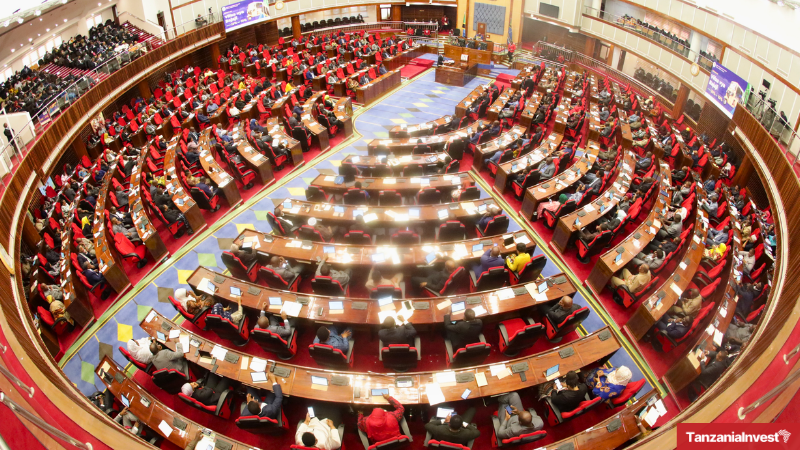
Tanzania Parliament National Assembly Bunge

Tanzania’s Parliament approved the TZS 62.33 trillion (± USD 24 billion) Government Budget for 2026/27 by 385 of 393 votes on 23 June 2026, with the spending plan and its tax measures taking effect on 1 July 2026.

The budget was presented to Parliament in Dodoma on 11 June 2026 by the Minister for Finance, Ambassador Khamis Mussa Omar, and debated over seven working days from 15 to 23 June 2026.

Parliament Speaker Mussa Azzan Zungu announced the results on 23 June 2026, with 385 Members of Parliament voting in favour, eight against, and eight absent, a majority of approximately 98%.

Tanzania Investment Guide 2026 Free Edition

Before the final vote, Members of Parliament reviewed and voted on the Finance Bill 2026 line by line, approving the individual tax measures it contains.

The debate concluded after Ambassador Omar and Professor Kitila Mkumbo, Minister of State in the President’s Office for Planning and Investment, responded to issues raised by Members of Parliament during the seven days of discussion.

Ambassador Omar said the government was committed to tighter spending controls, settlement of arrears owed to contractors and suppliers, and improved revenue collection through tax administration reforms, in line with President Samia Suluhu Hassan’s directives on fiscal discipline. He acknowledged room remained to improve oversight and spending efficiency.

The government has set aside TZS 1.2 trillion (± USD 462 million) for clearing arrears in 2026/27, with about TZS 100 billion expected to be paid out each month, subject to cash flow, a measure intended to support private sector liquidity and continued project implementation.

Professor Mkumbo said 54.2% of the workforce remains engaged in agriculture, livestock, and forestry, and that industrialisation efforts would continue to be anchored in agricultural transformation.

Tanzania Investment Guide 2026 Full Edition

The budget takes effect on 1 July 2026, subject to the President signing the Finance Act into law.

Want to know more about the Economy in Tanzania? Our free overview of the Tanzania Business and Investment Guide 2026 covers the Economy, plus key sectors and investment opportunities. The complete 141-page edition includes policies, taxation, key regulations, full macroeconomic data, and sources.

Download Free OverviewGet the Full Guide
Related Posts
Tanzania TISEZA Investments Projects Q4 2025 October-Dicember
Read More

Tanzania Investment Hits USD 3.16 Billion in Q4 2025, Four SEZs and Two PPPs Open to Investors

The Tanzania Investment and Special Economic Zones Authority registered 278 projects worth USD 3.16 billion in Q4 2025, more than doubling the USD 1.57 billion recorded a year earlier, with 71,412 jobs projected and China leading foreign direct investment at USD 950 million. The bulletin also opens four Special Economic Zones in Bagamoyo, Kibaha, Dodoma, and Kahama covering over 2,100 hectares, alongside two Dar es Salaam public-private partnership projects worth a combined TZS 182 billion, to investors in manufacturing, agro-processing, mining, and real estate.
TANZANIA ANNUAL INFLATION RATE MAY 2026
Read More

Tanzania Inflation Jumps to 4.2% in May 2026 Driven by Fuel and Transport Surge

Tanzania's annual headline inflation accelerated to 4.2% in May 2026, up from 4.0% in April, as transport prices surged 11.9% year-on-year following monthly fuel price increases of 13.8% for diesel and 10.4% for petrol. Core inflation also rose to 3.4% from 3.1%, signaling broadening price pressures beyond volatile food and energy items, according to the National Bureau of Statistics.
Tanzania Khamis Mussa Omar Parliament bunge
Read More

Tanzania Finance Bill 2026 Drops Agricultural Withholding Tax, Softens Used Car Duties and Cuts SME Presumptive Tax to 4%, Effective 1 July 2026

Tanzania’s Finance Bill 2026, presented to Parliament on 24 June 2026 by Finance Minister Ambassador Khamis Mussa Omar, takes effect on 1 July 2026 and amends 26 laws to implement the 2026/27 budget tax measures. The Parliamentary Budget Committee dropped the proposed 1% withholding tax on agricultural produce, the proposed 5% excise on motorcycles and on gambling stakes, softened excise duties on imported used vehicles, cut the SME presumptive tax to 4.0% from 4.5%, confirmed mining Framework Agreement tax incentives during the construction phase, and introduced a new 0.5% stamp duty on agricultural land transfers.
TanzaniaInvest Interview FAyaz Bhojani Managing Partner FB Attorneys
Read More

Interview with Dr FAyaz Bhojani, Managing Partner of FB Attorneys, on the Evolution of the Firm, and Litigation, Arbitration and Taxation Issues in Tanzania

TanzaniaInvest interviewed Dr FAyaz Bhojani, Managing Partner of FB Attorneys, the only law firm in Tanzania ranked at the top by all three leading international legal directories, Chambers and Partners, IFLR1000, and The Legal 500. He discusses the firm’s cross-border and arbitration work, its strength in mining, oil and gas, and M&A, and the two factors foreign investors weigh most before entering Tanzania: the rule of law and a fair, predictable tax system.