



The Bank of Tanzania (BOT) recently issued the Monetary Policy Statement for 2026/27, containing an overview of monetary policy formulation and implementation in support of the broader macroeconomic objectives of the government.
This Statement reviews global and domestic economic performance, and the implementation of monetary policy and its outcomes in 2025/26.
In addition, it provides an outlook on global and domestic economic conditions and outlines the monetary policy stance that the Bank intends to pursue in 2026/27 to meet the policy objectives of maintaining low and stable inflation while supporting economic growth.

Domestic Economic Performance
In Mainland Tanzania, real GDP growth was strong at 5.9%, compared with the projection of 6%, driven by the construction, agriculture, and financial sectors.
The Zanzibar economy grew at 7%, surpassing the projection of 6.5%, reflecting strong investment in the tourism industry, construction, and manufacturing.
Inflation was projected to remain low and stable in 2025/26. In Mainland Tanzania, inflation was expected to stay within the target range of 3–5%.
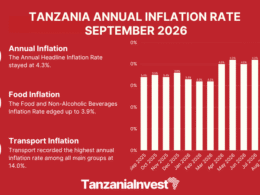
The actual outturn averaged 3.4% over the past ten months, largely attributable to prudent monetary policy and a moderation in non‑food inflation.
In Zanzibar, inflation eased to an average of 4.1%, driven by food and non‑food inflation components. The inflation rates aligned with the regional economic convergence criteria.

Domestic Economic Outlook
Domestic economic prospects remain favourable, with the economy’s diversification expected to help absorb external shocks.
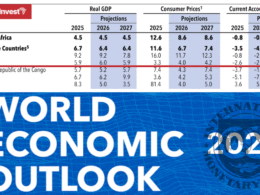
Real GDP growth in Mainland Tanzania is forecast to remain strong, reaching 6.3% in 2026 and 6.6% in 2027, largely underpinned by public and private sector investment, as well as export growth.
The main activities expected to significantly drive the growth include agriculture, mining, tourism, and construction.
The Zanzibar economy is forecast to grow strongly at 7.5% and 7.2%, driven by construction, tourism, and manufacturing.
Inflation is forecast to increase but remain within the target range of 3-5%. In Mainland Tanzania, inflation is forecast to be above 4%, while in Zanzibar it is projected to remain close to 5%.
The outlook is based on expectations of slower global economic activity relative to 2025, stable power supply and an adequate food supply.
The outlook also takes into consideration high oil and fertilizer prices caused by supply chain disruptions in the Middle East. Risks to the inflation outlook are tilted to the upside, largely reflecting uncertainty surrounding the duration and intensity of the conflicts in the Middle East.
Monetary Policy Outlook
The monetary policy stance in 2026/27 will be less accommodative, geared towards containing the second-round inflationary effects of the pass-through of high global commodity prices on domestic inflation.
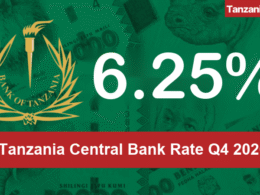
This stance will be complemented by fiscal and structural policies to enhance policy effectiveness. The Monetary Policy Committee (MPC) will continue to meet every quarter to assess economic conditions and decide the appropriate path of the Central Bank Rate (CBR) to ensure inflation remains within the target of 3-5%.
This inflation objective will be balanced with economic growth, a data-dependent monetary policy stance, and general economic prospects.
Monetary policy operations will continue to be calibrated towards keeping the 7-day interbank interest rate within the CBR target band.
Want to know more about the Economy in Tanzania? Our free overview of the Tanzania Business and Investment Guide 2026 covers the Economy, plus key sectors and investment opportunities. The complete 141-page edition includes policies, taxation, key regulations, full macroeconomic data, and sources, and is also available at no cost upon completion of a short form.
Download Free OverviewGet the Full Edition for Free